Read My Lips: Babies Learn to Talk From More Than Just Hearing Sounds
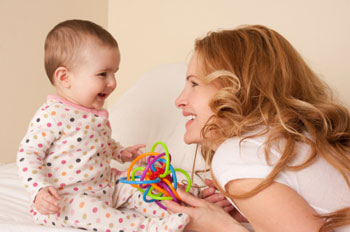
It's long been understood that babies experience speech and emotional development through hearing and eye contact. Speak and smile at a baby and they will listen, look into your eyes and smile back. But a new study shows that infants as young as six months old begin to watch a speaker's mouth when he or she talks. Can this research have an impact on a child's learning in later years?

 |
'Primed for Learning'
If babies have enough knowledge to 'know what they need to know about' and have the ability to 'deploy their attention to what's important at that point in their development,' as Bob McMurray, a professor of psychology at University of Iowa, told Boston.com in January 2012, can this information be important when it comes to how and when we begin teaching our children?
Possibly. McMurray goes on to say that the new research shows that one-year-old babies are 'primed for learning.'
Reading Rockets, a literacy initiative designed to help kids learn to read, says that children 'surrounded by language from birth' are able to speak fluently by the age of three. It's possible that this ability could translate into improved aptitudes for reading and writing as well as infants early on begin to grasp an understanding of language through 'lip-reading'.
The Earlier the Better
Patricia Kuhl, co-director of University of Washington's Institute for Brain and Learning Sciences, strongly believes that early language development leads to better preparation for reading and foreign language education for children in their later years.
Some scientists believe that this new study might indicate how the brain is 'wired' to learn other things besides speech. If so, surely this would have a profound impact on how and when we begin to teach children other skills.
This knowledge might also help to identify potential problems. For instance, might infants who do not 'lip-read' have problems learning language or reading down the road? Could these infants possibly be showing early signs of autism and, if so, can intervention methods be employed before the child is even a year old?
The Importance of Baby/Parent Interaction
If nothing else, the study reinforces the belief that personal one-on-one time between parents and babies is of the utmost importance.
Some experts have already suggested turning off the television or computer and engaging in more personal interaction. The fact that babies are studying faces more intently than realized before and are actually benefitting developmentally because of it might have a positive effect on learning processes in their later years.
So if you are a parent of a child between six months and one year old, take time to speak to your baby, and to look them in the face while you're doing so. You could give them a lot more than something to smile about.
Other Articles You May Be Interested In
-
How to Help Your Child Read Above Their Grade-Level
Reading is important in our daily lives and is a cornerstone in all other academic subjects, including math and science. Do you want your child to not only succeed in reading but to excel beyond their (and possibly your) expectations? There are some things you can do to help your child improve their reading skills and maybe even...
-
5 Creative Ways to Celebrate Read to Your Child Day

February 14th is not only Valentine's Day, it's also Read to Your Child Day, an occasion to celebrate reading with your child. Here are five ideas for how you can observe this special day.
We Found 7 Tutors You Might Be Interested In
Huntington Learning

- What Huntington Learning offers:
- Online and in-center tutoring
- One on one tutoring
- Every Huntington tutor is certified and trained extensively on the most effective teaching methods
K12

- What K12 offers:
- Online tutoring
- Has a strong and effective partnership with public and private schools
- AdvancED-accredited corporation meeting the highest standards of educational management
Kaplan Kids

- What Kaplan Kids offers:
- Online tutoring
- Customized learning plans
- Real-Time Progress Reports track your child's progress
Kumon

- What Kumon offers:
- In-center tutoring
- Individualized programs for your child
- Helps your child develop the skills and study habits needed to improve their academic performance
Sylvan Learning

- What Sylvan Learning offers:
- Online and in-center tutoring
- Sylvan tutors are certified teachers who provide personalized instruction
- Regular assessment and progress reports
Tutor Doctor

- What Tutor Doctor offers:
- In-Home tutoring
- One on one attention by the tutor
- Develops personlized programs by working with your child's existing homework
TutorVista

- What TutorVista offers:
- Online tutoring
- Student works one-on-one with a professional tutor
- Using the virtual whiteboard workspace to share problems, solutions and explanations